MODELS

MODELS AI skill suite + Mental Model v2 AI skill

Upgrade your thinking.
Bring it into
your work with AI.

Turn a library of powerful ideas into something you can use on the decision, project, or question in front of you.

Get the MODELS AI skill suite and the Mental Model v2 AI skill, with 2,000+ AI-generated manuals designed for deep personal study and detailed use by your AI.

Created by Michael Simmons · Personal help getting installed

2complementary AI skills
2,000+AI-generated model manuals
50on-demand classes
50human-created manuals
1:1installation help

From knowing to using

You’ve collected the ideas.
Now put them to work.

Your reading list keeps growing. You find a useful idea, save it, and forget to reach for it when a real decision comes along.

These skills give you a way to bring that knowledge into the situation you’re facing. Find a relevant model, work through it with AI, and check whether it changes what you see or what you try next.

Start with something you actually need to do.

Choose where to focus.

Use the 80/20 rule to ask which few activities deserve more of your time, instead of treating every task as equally important.

Examine a decision.

Try inversion: imagine how your plan could fail, then use that view to find assumptions worth checking.

Explain an idea clearly.

Find a model, example, or comparison that gives you better language for teaching, coaching, or communicating.

The research behind working with models

Knowing a model
is only the beginning.

In his research on mental models, Michael returns to a practical question: can you reach for the right idea when it counts? Studies on expertise and problem solving help explain why that matters.

Expertise

See the principle beneath the details.

In studies of physics problems, experts organized problems around underlying principles. Novices tended to group them by surface features, such as the objects mentioned.

A practical takeaway

Look for the structure that makes a problem work. A familiar principle may connect situations that look very different.

Chi, Feltovich & Glaser · 1981

Retrieval & transfer

Reach for the model when it matters.

In classic experiments, people used a military-story analogy to solve a medical puzzle much more often when prompted to connect the two. Without that hint, many missed the useful connection.

A practical takeaway

Practice recognizing when an idea applies. Remembering a model and bringing it to bear on a new problem are distinct skills.

Gick & Holyoak · 1980

Reasoning

Make uncertainty easier to work through.

In a study of advanced medical students, presenting statistical information as natural frequencies—counts within groups—helped them solve more textbook probability problems than presenting it as probabilities.

A practical takeaway

Choose a representation that makes the relationships visible. How you frame the information can affect how well you reason with it.

Hoffrage and colleagues · 2015

These studies examine specific representations and learning methods. They did not test the MODELS AI skill suite or the Mental Model v2 AI skill.

Explore Michael’s research roundup

Mental models in practice

Great thinkers collect, create,
and use mental models.

As Michael describes in his story, many influential thinkers deliberately collect useful principles and develop frameworks of their own. They give those ideas names and use them to guide real decisions. Here are six examples from their own writing.

Jeff Bezos

Building Amazon

One-way & two-way doors

Separate decisions that are hard to reverse from those you can change. Bezos uses that distinction to decide when to deliberate carefully and when a small team can move quickly.

2015 shareholder letter

Warren Buffett

Investment judgment

Circle of competence

Focus on businesses you can understand and evaluate. Buffett makes knowing the boundary of that understanding a central part of his investment discipline.

1996 shareholder letter

Annie Duke

Decisions under uncertainty

Resulting

Separate the reasoning behind a decision from the result it happens to produce. Duke explains how a lucky outcome can reward a poor choice—and why one result can mislead you.

Don’t be a resulter

Howard Marks

Thinking about markets

Second-level thinking

Consider what other people already expect, as well as your own assessment. Marks asks how those expectations are reflected in the price before deciding where an opportunity might lie.

It’s Not Easy · 2015

Paul Graham

Finding early customers

Do things that don’t scale

Recruit and serve early users personally. Graham describes building stores for Viaweb’s merchants himself, using that close contact to discover missing features and improve the product.

Do Things that Don’t Scale · 2013

Jim Collins

Building an organization

The flywheel

Identify the activities that reinforce one another and build momentum. Collins teaches leaders to make that sequence explicit so their team can understand how its organization grows.

Turning the Flywheel · 2019

The two skills at the heart of your upgrade

Two ways to go deeper.
One complete upgrade.

01 / The MODELS AI skill suite

Give your AI
a complete thinking process.

A reusable method for finding what your problem needs—and turning that into a move you can understand, use, and test.

6 kinds of thinkingConnected in one method, with deeper tools inside each.

Hard problems ask different things of you. Sometimes you need to see the situation clearly. Sometimes you need a better option, a sharper goal, or evidence that another hour of thinking cannot supply.

MODELS gives your AI a method for working through that choice with you. Bring a decision, a stalled project, or a recurring problem. The skill guides the conversation toward the kind of thinking that fits, then toward something you can do with it.

MMapMake the situation easier to see and reason about.
OOptionsDevelop useful alternatives you can compare.
DDestinationDefine success and what you need to protect.
EEvidenceFind the observation that could change your mind.
LLoop & dynamicsTrace what repeats, builds up, or feeds back.
SSystemArrange people, AI, and tools around the work.

A deep toolkit behind the six questions.

For example, Map draws on 21 families of representations. A comparison table can expose a tradeoff; a timeline can reveal a sequence; a causal map can make an assumption visible. The method helps you explore which view serves your question.

A way to question the answer.

Map checks its work with three plain questions: Same facts? Better move? Worth it? You can examine what a representation reveals, what it leaves out, and whether the extra effort helps your situation.

A bridge from reasoning to action.

The execution method defines the move to try, when to try it, what to protect, when to stop, and what observation would make you keep or change the approach.

Help now. A method you can learn.

Ask your AI to do the work, work alongside you, or teach you the method. Open up explanations and practice when you want to build your own understanding.

An illustrative workflow

“I have three course ideas. Which should I pursue?”

  1. Define the decision. Clarify the result you want and the limits on your time.
  2. Make the tradeoffs visible. Compare the ideas on the same terms.
  3. Find the uncertainty that matters. Identify what you need to learn from the intended audience.
  4. Choose a small test. Decide what result would make you continue, revise, or stop.

The useful output is a clearer decision process and a next step you can test. You can return with what happened and use it to revise the plan.

Use MODELS across decisions, research, creative work, planning, and problems that keep coming back.

02 / The Mental Model v2 AI skill

Go deep on a model.
Put its full reasoning to work.

2,000+ AI-generated mental model manuals. Designed for serious study by you and detailed execution by your AI.

48manuals behind the development of Michael’s templates

You can understand the basic idea of inversion, feedback loops, or the 80/20 rule in a few sentences. Learning when a model applies, how to reason with it, and what it changes in a real situation takes deeper work.

This skill gives you 2,000+ AI-generated mental model manuals, built from Michael’s templates used to create 48 mental model manuals. Each manual is designed to serve as both a resource you can study and material an AI can work through in detail.

A decade of mental-model research, carried into the templates.

Michael’s work has spanned studying models, teaching them, and creating manuals that make the ideas usable. That experience informs the templates behind this library: a way to give each model sustained attention, then put that depth within reach when you need it.

For your own understanding

Make a model part of how you think.

Choose a model you want to understand deeply. Study the reasoning, work through its application, and return to it with a question from your own life or work. Use AI as a study partner along the way.

For your work with AI

Give the model a deeper treatment.

The manuals are designed to be executed by an AI. Give your AI the relevant manual and your situation so it can work through the model’s reasoning and application in detail.

An example · Inversion

“How could this project fail?” is the starting point.

Inversion examines a goal by working backward from an unwanted outcome. For a product launch, that might mean exploring why customers would ignore the offer, what could prevent delivery, and which assumptions deserve an early test.

A deeper application follows those possibilities through: which failure paths are plausible, what would reveal them, and what you could change before committing more time or money.

Illustrative use of the model, not an excerpt from a manual or a report of customer results.

Pick the model your situation calls for. Study it yourself, work through it with AI, or do both.

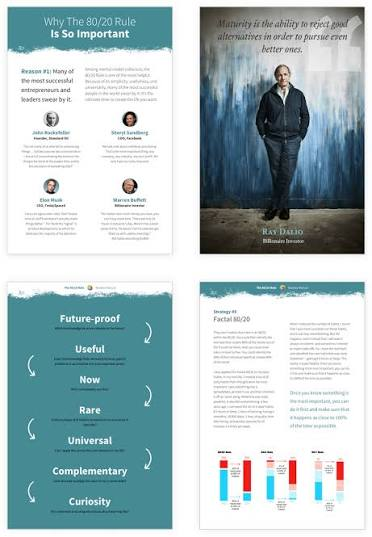
Four sample pages from Michael’s 80/20 manual, showing explanations, examples, a visual framework, and charts
Inside Michael’s earlier human-created 80/20 manual.

What’s inside a mental model manual

From the first explanation
to your own application.

Michael spent four years publishing a monthly manual, with roughly 10,000 words devoted to a single model. That original teaching format gives you room to learn in layers: a clear introduction, deeper explanations, examples, and practice.

  1. A clear 101 overview

    Why the model matters, how it works, and the vocabulary you need. Start with an explanation you can understand and put into your own words.

  2. A deeper, more nuanced explanation

    A high-level summary followed by an in-depth treatment. Explore the reasoning behind the idea so you have more to work with when your situation gets complicated.

  3. Examples that connect the idea to life

    See the model applied to practical situations. Use those examples to recognize where the same pattern might appear in your decisions, work, or learning.

  4. Exercises, resources, and templates

    Work through the model on a question of your own. Return to the prompts and structure when you want to practice, teach the idea, or apply it again.

The 2,000+ AI-generated manuals extend Michael’s template-based approach into a broader library for deep study and detailed use by AI.

The support and the source material

Go beyond
the download.

Your upgrade includes a one-on-one installation call to help you get set up, full access to the MODELS site, and a library you can return to as you learn.

50 on-demand classes
Explore mental models at your own pace.
50 human-created manuals
Move from a clear introduction to deeper explanations, practical examples, and exercises for applying the ideas.
Upgrade now
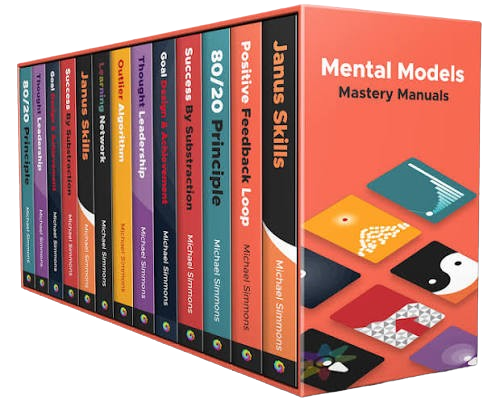
Michael Simmons’s Mental Models Mastery Manuals, including 80/20 Principle and Positive Feedback Loops
Mental model teaching materials from Michael’s archive. Your upgrade includes digital access.

A note from Michael Simmons

A decade of collecting ideas.
A new way to use them.

At 16, I co-founded a web development company with Cal Newport. We spent the first $1,000 we earned on books. The question that hooked me was simple: how do people learn, think, and do extraordinary work?

In 2015, I began systematically studying learning and intelligence, including the habits of entrepreneurs and investors. Over a decade, I compiled more than 2,000 mental models across disciplines.

One early lesson came from writing. When I started publishing on Forbes in 2013, I asked successful writers what mattered most. Applying the 80/20 rule led me to spend much more attention on something I’d once treated as an afterthought: the headline.

That is what drew me to mental models: an idea could change where I put my effort. I went on to build the Mental Model Club and its library of classes and manuals. But collecting an idea and remembering to use it are different challenges.

These skills bring that work into a conversation with AI, so you can explore a model in the context of your own question.

Read my full story
Michael Simmons
Michael Simmons · Creator of MODELS

In their own words

What people say about
Michael’s Mental Model tools.

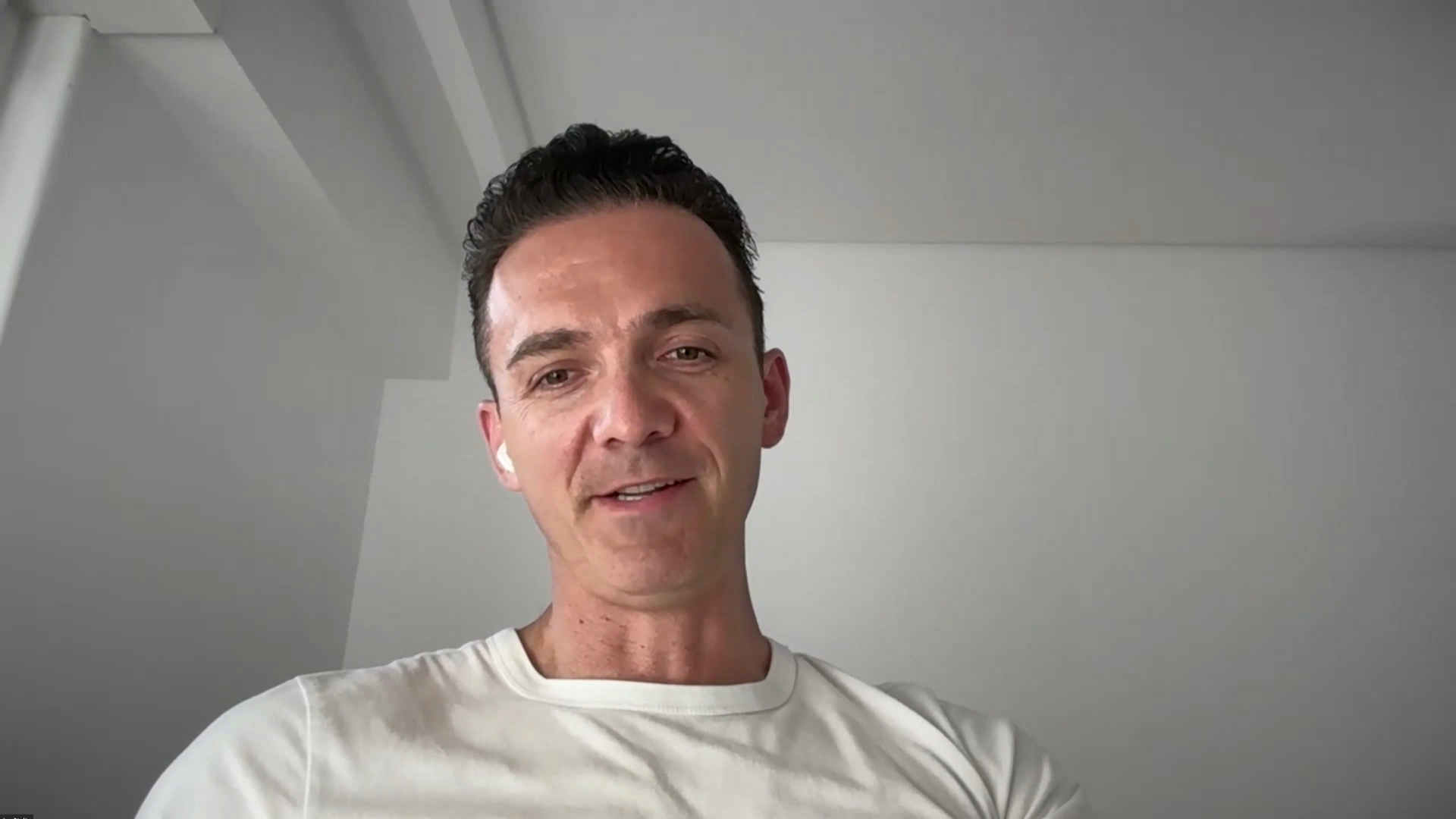
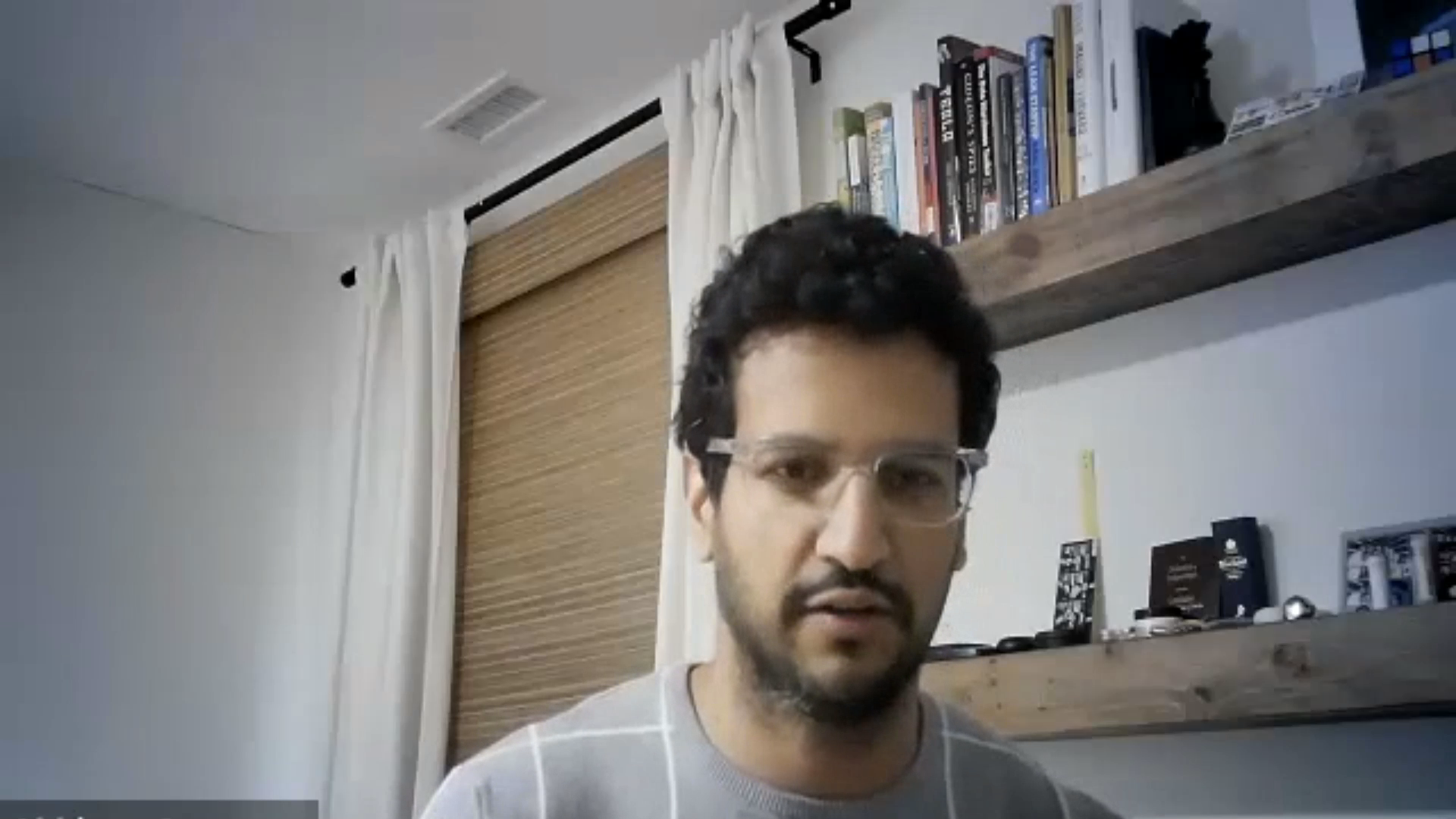
Three short video testimonials from Michael’s article, discussing an earlier version of his Mental Model skill.

30-day refund guarantee

Give yourself time
to put it to work.

Explore the skills. Go deep on a mental model. Bring the tools to a real question you’re working through.

If the upgrade isn’t right for you, request a full refund within 30 days of your purchase.

Email support@thoughtleader.school with your Stripe receipt or the email address you used at checkout so we can locate your purchase.

Before you upgrade

A few useful
details.

What is an AI skill?

A skill packages instructions and supporting material for a particular kind of work. These skills guide how a compatible AI works through your questions, with thinking methods you can inspect and question.

How do the two skills fit together?

MODELS helps you find which part of the thinking needs attention: a clearer map, more options, a destination, evidence, a recurring pattern, or the way work is arranged. The Mental Model v2 AI skill gives you depth on an individual model through 2,000+ AI-generated manuals. MODELS supplies the wider method for choosing, adapting, combining, and testing useful thinking moves.

What is included in the $995 upgrade?

The MODELS AI skill suite; the Mental Model v2 AI skill with 2,000+ AI-generated manuals; a one-on-one installation call; full MODELS site access; 50 on-demand mental model classes; and 50 human-created mental model manuals. The checkout shows the current offer and payment details.

Are the manuals AI-generated or human-created?

You receive both: 2,000+ AI-generated mental model manuals built from Michael’s templates, plus 50 human-created mental model manuals from his teaching library. The AI-generated manuals are designed for deep personal learning and detailed execution by an AI.

Will it work with my AI?

Your upgrade includes a one-on-one installation call to help you get set up and use the skills in your AI workflow. You’ll need access to a compatible AI environment; the upgrade is for the skills and learning materials.

Is there a refund guarantee?

Yes. If the upgrade isn’t right for you, email support@thoughtleader.school within 30 days of purchase to request a full refund. Include your Stripe receipt or checkout email address so we can locate your payment.

What can I explore before purchasing?

Start with the course, guide, and articles. The site offers free exploration, with free registration after five substantial items.

What results should I expect?

You receive the tools, materials, and installation help described here. They are designed to support useful thinking and practice. Better decisions and lasting independent skill are goals to test through use; they are not guaranteed outcomes.

Your next question is a place to start

Bring the curiosity.
Add the toolkit.

The MODELS AI skill suite. The Mental Model v2 AI skill.
2,000+ AI-generated manuals. Personal installation help.

$995 USD

Get the full upgrade

Secure checkout with Stripe. 30-day refund guarantee.